Models of Technology/Curriculum Integration
There are three models of technology/curriculum integration that most educators are familiar with: SAMR (Substitution, Augmentation, Modification, and Redefinition) TIM (Technology Integration Matrix), and LoTI (Levels of Teaching Innovation). (**Because this is for a class, and not just for my blog, I'm going to focus on SAMR. I hope to revisit this and do entries on TIM, and LoTI at some point. If you want to look at TIM, here is the link to the University of South Florida website. If you're curious about LoTI, here is a link to the LoTI website.)What is SAMR?
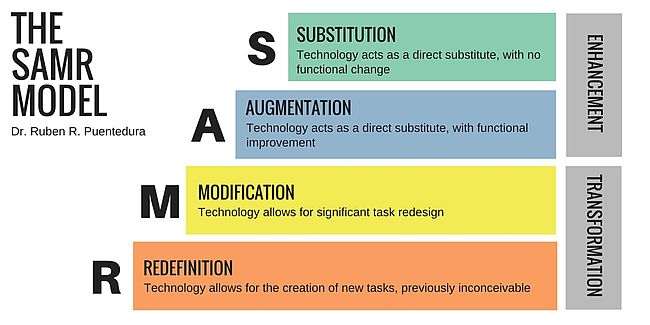
SAMR is a technology integration model, developed by Dr. Ruben R. Puentedura, of Williams College (MA), in 2010, "to help guide teachers to in effectively integrating technology in classrooms. (Williams College website: https://learning-in-action.williams.edu/archives/elementary-outreach/ipad-initiative/reuben-puentedura/)
 |
| From the Wikiversity website https://en.wikiversity.org/wiki/Instructional_design/SAMR_Model/What_is_the_SAMR_Model%3F |
SAMR and a Cup of Coffee
One of the best analogies I found to explain SAMR is from Tim Holt's Tumblr and it goes a little like this: Substitution is like going to Starbuck's and getting a plain cup of coffee from them, instead of making it yourself. Augmentation would be going to Starbuck's and having them add something to the coffee--maybe ice, maybe a dollop of caramel. Still a cup of coffee, and you probably could do it yourself. Modification would be going to Starbuck's and getting a Caramel Macchiato--the coffee is now transformed. It's no longer a basic coffee that we could easily make ourselves. Redefinition would be like getting a Starbuck's Pumpkin Spice Latte. They have a trademark on their recipe, so you can only truly get one at Starbuck's.
SAMR in the Classroom
I think what makes technology scary for teachers sometimes is the thought that we should be using technology at the Redefinition level with every learning activity. No, not at all. While I would encourage teachers to incorporate technology use in their lessons, sometimes the most appropriate use of technology is at the Substitution level--having students fill in a form through MS Word or Google Docs, instead of filling out a worksheet. You might Augment by having students listen to an ebook while they read along. Modification might be to have students write a blog about a book they've read so that others not necessarily involved in their school can comment on their content. Redefinition would be to have students create a multimedia presentation, like a book trailer, for the book they've read.
The Marriage of TPACK and SAMR
We can use TPACK and SAMR when we're lesson planning to reflect on what is the best tech solution to teach a skill or concept. Based on the pedagogy you believe implements content best, what tech tool will deliver it? What do you want students to be able to do with the content? What tech tool will help them achieve that goal? Do you only need to substitute or augment what students already know how to do? How can students use technology to go beyond the minimum requirements of the task presented? Keeping this in mind as you lesson plan will help you effectively use technology in your classroom.
This video, by the North Carolina Virtual Public School, does a good job explaining how TPACK and SAMR can work together to improve instruction.
This video, by the North Carolina Virtual Public School, does a good job explaining how TPACK and SAMR can work together to improve instruction.


No comments:
Post a Comment